


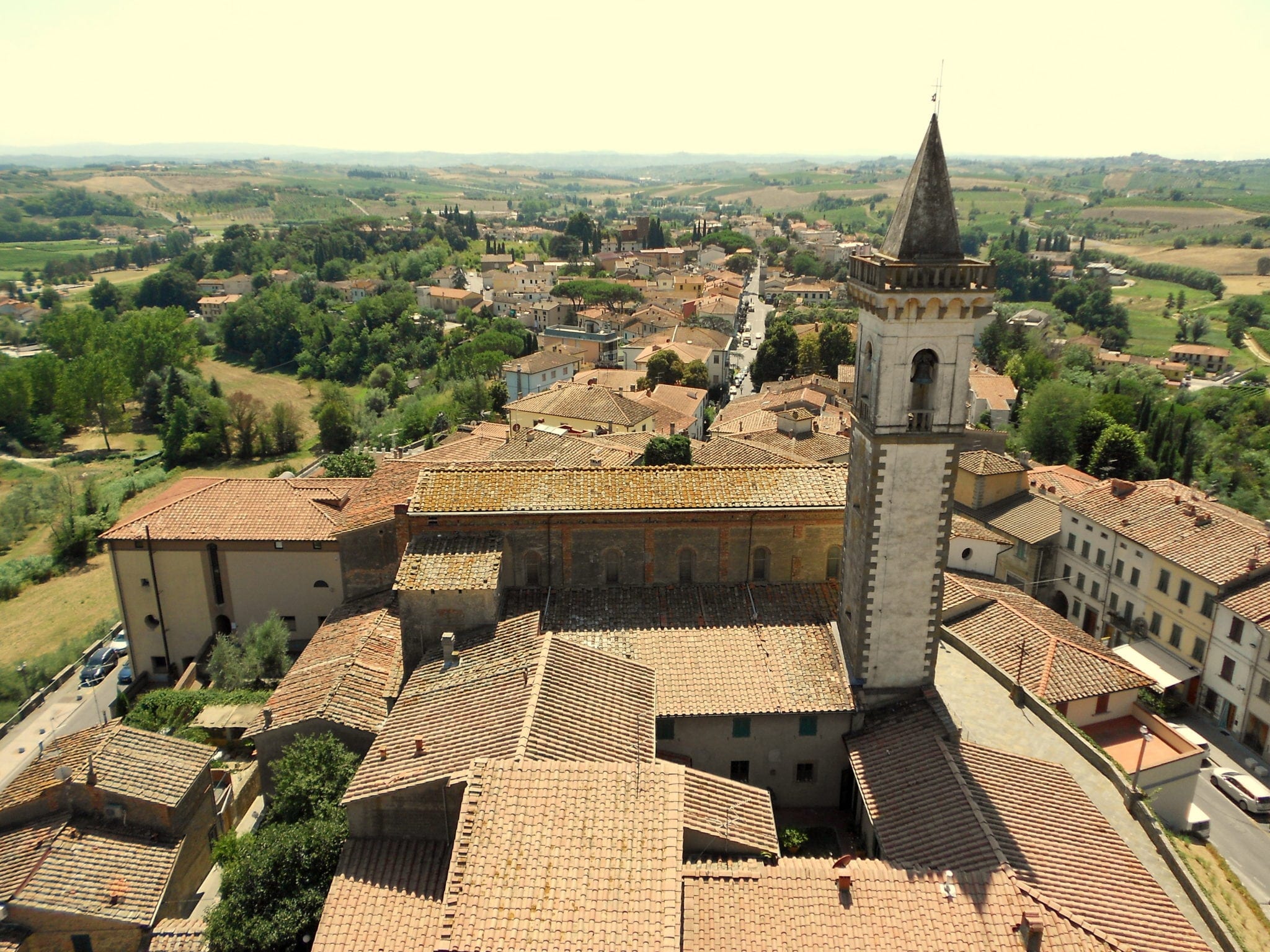
Il comune di Vinci è una delle “Terre del Rinascimento” per eccellenza, avendo tra i suoi nativi nientemeno che il grande artista e scienziato Leonardo da Vinci. Si estende lungo la vallata del Montalbano, in provincia di Firenze, ed ospita circa 14000 bitanti.
Il “castrum” di Vinci sorge nell’ambito dell’opera d’espansione dei conti Guidi e Alberti, potenti feudatari spesso contrapposti alle nascenti realtà comunali. La definitiva consacrazione dei Guidi in quei luoghi avviene nel 1120, con l’investitura da parte di Federico II, ma siamo già nell’epoca di declino del casato e il territorio passa di lì a poco sotto il dominio di Firenze. Profondamente legati all’età feudale, gli abitanti di Vinci si ribellano alla Repubblica nel 1315, con un esercito guidato da Uguccione della Faggiuola, che capitolerà tre anni dopo.
Già nel 1320 il borgo subisce nuove devastazione a seguito della discesa delle truppe pisane di Castruccio Castracani. Dopo la pace di Montopoli, si avvia un periodo di tregua tra Firenze e Pisa, fino al riesplodere del conflitto nella seconda metà del Trecento, quando lo stesso borgo è impegnato prima nell’arginare le truppe mercenarie di John Hackwood e poi a sventare un’azione di alcuni fiorentini antireppblicani. I vinciesi provvedono da soli anche ad allontanare le truppe spagnole, durante la discesa di Carlo V in Toscana di metà Cinquecento.
Intorno al 1452 nasce Leonardo da Vinci, che la città ha provveduto a celebrare con l’apertura di un Museo Leonardiano, arricchito da una biblioteca, nella rocca dei Guidi e dalla galleria privata “Museo Ideale Leonardo da Vinci di Arte, Utopia e Cultura della terra”, sempre ospitata nelle cantine del castello. Inoltre è ancora custodita, a due chilometri dal centro, la casa dove nacque e trascorse parte della sua infanzia l’autore della Gioconda. All’interno della città di Vinci si possono inoltre ammirare le chiese di San Bartolomeo in Sovigliana e di Santa Croce. A quattro chilometri dal capoluogo sorge invece l’antica pieve romanica di San Giovanni in Greti a Sant’Ansano, originaria almeno del X secolo, quando fu citata in un documento dell’imperatore Ottone III del 997.
Da sempre un florido centro agricolo, Vinci è famosa per la produzione di Chianti D.O.C.G. e di olio di grande qualità. Nell’ultimo secolo, però, si è affiancata alla produzione agricola un’intensa attività industriale che coinvolge i settori dell’abbigliamento, del legno, del confezionamento di alimentari, dei calzaturifici, oltre che le più tradizionali produzioni di vetro e ceramiche.