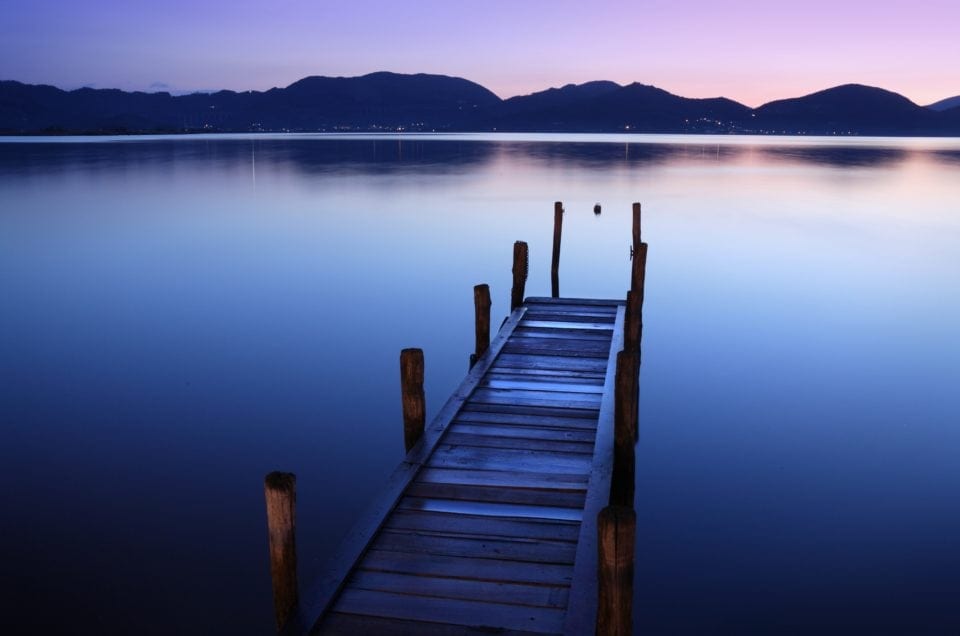
The lake of Massaciuccoli is a water basin in Western Tuscany set between Pisa and Viareggio at the foot of the Apuan Alps. It is 7 km. wide and it is not more than 3 m. deep. Near the lake, the famous composer Giacomo Puccini is buried.
The lake of Massaciuccoli and the reserve around it represent a sort of open-air museum. In effect, they are the last bulwarks of the lacustrian and marshy area that characterized that part of Tuscany until the XIX century. Once it was wider and reclamations later reduced it from the half of the XVIII century on. At that time, most of the area that surrounded the lake was transformed into a fertile land to be cultivated. Since 1985, the territory around the lake was transformed into the Natural Reserve of the Oasis of the Lake of Massaciuccoli.
Today, this reserve is one of the most important ornithological sites in Italy. During 120 years of research, observations and studies, at least 300 different species of birds both migratory and geographically stable have been catalogued and some of them are not necessarily connected to wet and marshy places. Along the 47 hectares of land, in effect some microclimates have developed. They are necessary for numerous kinds of migratory birds coming from Northern Europe to winter in the mild Mediterranean climate of the lake to find a comfortable habitat fit for their characteristics: there are running waters where there are diving ducks, grebes and cormorants and lower and muddier waters that are ideal for herons and surface birds .
The park is also famous for its rich flora. On the "aggallati", namely small floating isles that stem from the interlacing of cane roots, plants such as the sphagnum and the carnivorous drosera, that is to say species born in the last glaciation, can be observed. Moreover, eucalyptus plants, white poplars, alders, tamarisks, floating water lilies and numerous other varieties of shrubs and plants can be seen, too.
Near the lacustrian area, the town of Massaciuccoli, a cluster of houses in Massarossa rich in remains of ancient Roman constructions, can be visited. The Romans settled this area in the III century B.C. at the end of a victorious campaign against the Liguri and carried out reclamations in some parts. The traces of their passage are represented by a spa that originally was a villa and its remains are still visible.
On the western bank of the lake, instead, it is possible to visit the Torre del Lago Puccini, a wonderful place in the territory of Viareggio that takes its name from the famous composer that is buried in a chapel adjacent to the villa where he lived. Every year, an open-air season of lyric music in honour of this maestro is held and the stage overlooks the wonderful landscape of the lake.